Bitcoin Digital Credit Market Faces $10 Billion Liquidity Stress Test
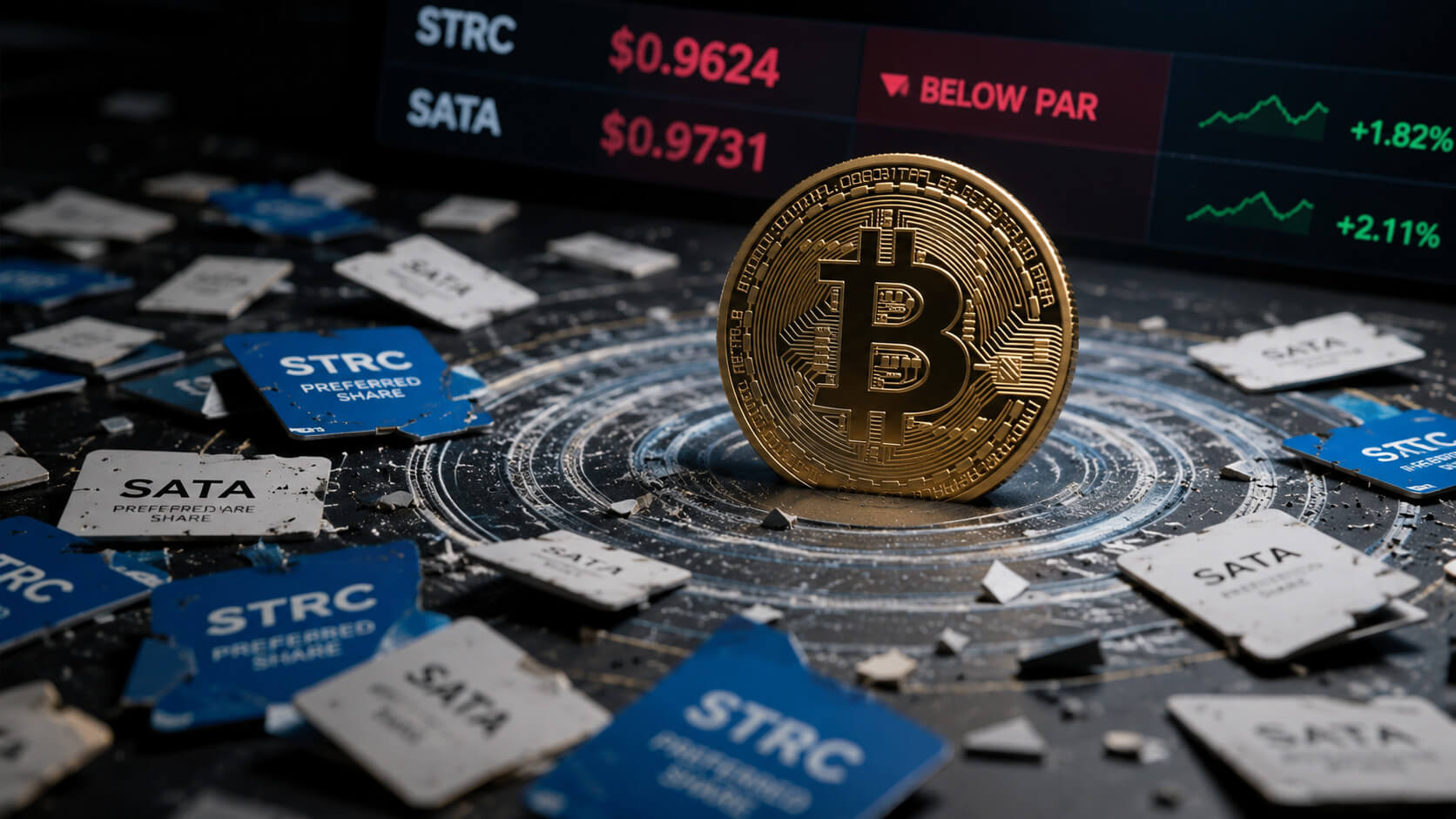
The emerging Bitcoin digital credit trade (a way for investors to earn steady interest on BTC holdings) faced its first major crisis this week as market values fell below their starting prices. Significant volatility sparked margin calls (requirements for more collateral to cover potential losses) across a market estimated to be worth $10 billion. Institutional investors were forced to sell positions as primary products like Strategy’s STRC and Strive’s SATA shares dropped significantly below their par value (original face value of $100), creating panic among those seeking stable income from the crypto sector.
The Breakdown of the Income Trade
For months, the Bitcoin digital credit market was marketed as a safe haven for investors. These products operate as income instruments (assets that pay regular cash to owners) built around companies that hold Bitcoin in their treasuries. However, this week’s sudden price drop proved that even these 'safe' products are tied to the wild price swings of the underlying cryptocurrency. When values dropped, lenders demanded more money to secure the loans, leading to a domino effect of selling pressure.
Margin Calls and Market Recovery
As SATA and STRC shares slid into the $80 and $90 range, the $10 billion market felt the weight of margin calls. A margin call happens when a broker demands that an investor deposit more money to keep a trade open because the investment's value has fallen too low. Despite the initial shock, both products saw a slight rebound as brave buyers stepped in to buy the discount. This recovery suggests that while the market is fragile, there is still appetite for yield-bearing (interest-paying) Bitcoin assets.
What This Means for USA Investors
For everyday USA investors, this event serves as a warning that 'fixed income' in the crypto world is not the same as a government bond or a savings account. Any investment that promises yield based on Bitcoin’s price is subject to high risk. If you are holding these types of digital credit products, you must be prepared for temporary price drops and ensure you have enough cash on hand to avoid being liquidated (having your assets sold automatically by the exchange) during a market dip.
Source: CryptoSlate