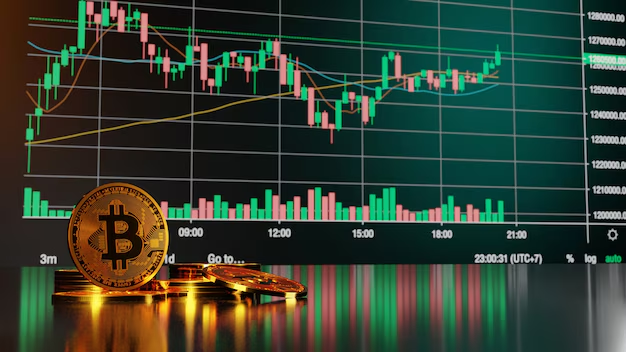
Bitcoin Surges Back to $65,000 as Global Stability Returns
Bitcoin (BTC), the world's first decentralized digital currency, climbed back above the $65,000 mark today as global geopolitical pressures began to ease. Investors and day traders responded positively to a calmer international landscape, leading to a renewed interest in 'risk-on' assets like cryptocurrencies. This recovery comes after a period of high volatility (sharp price changes) where the market dropped due to fears of conflict and economic uncertainty.
The Drivers Behind Bitcoin's Recent Recovery
The primary reason for this price jump is the reduction in geopolitical tension, which often causes investors to pull money out of volatile markets. When world events stabilize, market participants regain their 'risk appetite' (the willingness to invest in assets that might fluctuate in value). Bitcoin is frequently viewed as a barometer for global financial health; when people feel safe about the future, they tend to move capital into digital assets. This recent push back to $65,000 suggests that the 'fear index' is lowering among institutional and retail buyers alike.
Furthermore, technical analysts noted that Bitcoin held strong support levels during its dip. Support levels are price points where a downtrend tends to stop because of a concentration of buying interest. By staying above these key areas, BTC showed resilience, encouraging more buyers to step in once the news cycle turned positive. This behavior reinforces the idea that Bitcoin is maturing as a financial asset, behaving similarly to traditional stocks during times of geopolitical shifting.
What This Means for USA Investors
For investors based in the United States, Bitcoin reclaiming $65,000 is a significant psychological milestone. It indicates that the 'bull market' (a period where prices are rising) may still have momentum despite short-term setbacks. However, beginners should remain cautious; while the easing of tension is good for prices, the crypto market is still subject to rapid changes based on Federal Reserve interest rate decisions and local inflation data. If you are holding Bitcoin in a digital wallet, this recovery helps protect your portfolio's value from the recent 'drawdown' (the peak-to-trough decline during a specific period).
American traders should also keep an eye on regulated Exchange Traded Funds (ETFs), which are investment funds traded on stock exchanges that track the price of Bitcoin. The inflow of money into these funds usually picks up when the news cycle stabilizes, providing more liquidity (the ease with which an asset can be bought or sold without affecting its price) to the overall market. As we move forward, the $65,000 level will likely act as a new baseline that traders will watch closely to determine the next major move.
Source: NewsBTC