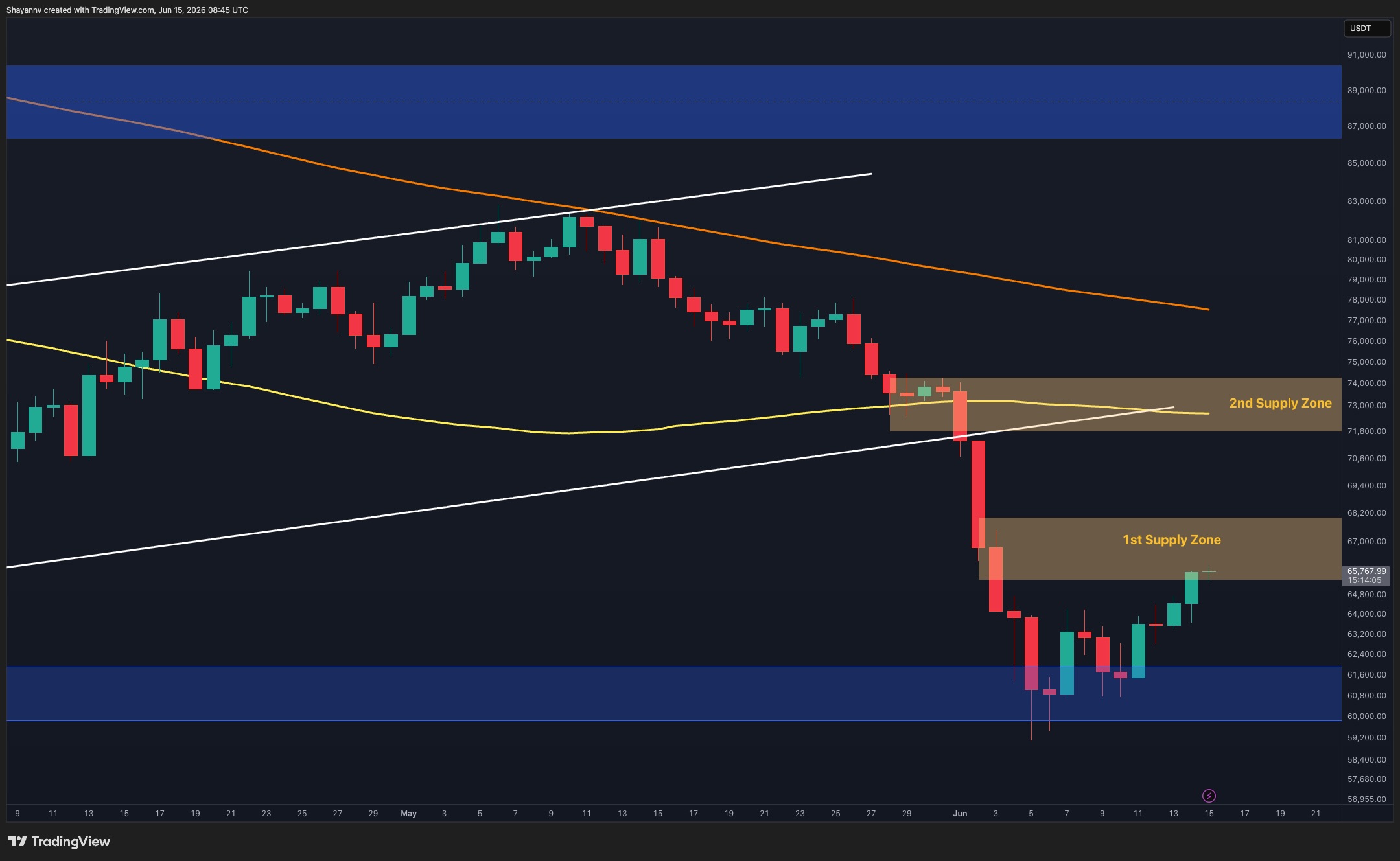
Bitcoin Price Analysis: Can BTC Extend Its Rally After Reclaiming $66K?
Bitcoin (BTC), the world's largest cryptocurrency, has staged an impressive comeback this week by climbing back above the $66,000 price mark. This recovery follows a recent market dip where the price fell toward $60,000, a key support level (a price point where buying interest is strong enough to stop further declines). Investors are now watching closely to see if this momentum is sustainable or if the asset will face another sell-off. The primary drivers behind this move appear to be a shift in global political news and a decrease in volatility, which has encouraged buyers to return to the market.
Understanding the Recent Bitcoin Price Recovery
The recent bounce in the Bitcoin price analysis was largely triggered by a cooldown in geopolitical tensions. Specifically, news regarding preliminary agreements between major global powers has reduced the 'risk-off' sentiment (a market condition where investors sell risky assets like crypto to buy safer ones like gold). When the world feels more stable, investors are more comfortable putting money into Bitcoin. Additionally, institutional demand—buying from big companies and funds—remains steady, providing a floor for the price even during volatile weeks.
Technical analysts are currently looking at the $68,000 level as the next major hurdle. If Bitcoin can consistently trade above this point, it could signal a return to its previous all-time highs. However, we must also monitor the 'RSI' or Relative Strength Index (a tool used to measure if an asset is overbought or oversold). Currently, the RSI suggests that while the momentum is positive, the market is not yet in 'bubble' territory where a crash is imminent. This balance is often seen as a healthy sign for long-term growth rather than a short-term speculative spike.
Macroeconomic Factors and Market Sentiment
Beyond just charts, the broader economy plays a massive role in how Bitcoin performs. With the U.S. Federal Reserve keeping a close eye on inflation (the rate at which prices for goods and services rise), any hints of future interest rate cuts could act as fuel for Bitcoin. Lower interest rates generally lead to a weaker dollar, which often makes Bitcoin look more attractive as an alternative store of value. Many beginners view Bitcoin as 'digital gold' because, like the precious metal, it has a limited supply that cannot be printed by governments.
Liquidity—the ease with which an asset can be bought or sold without affecting its price—is also improving. Higher liquidity typically leads to smoother price movements and less drastic 'flash crashes.' As more retail investors (everyday people like you and me) start using regulated exchanges to buy BTC, the market becomes more mature. This maturity helps dampen the wild 20% swings that used to be common in the early days of cryptocurrency, making it a slightly more predictable environment for newcomers.
What This Means for USA Investors
For investors in the United States, the move back to $66,000 is a sign of resilience in the digital asset market. It suggests that despite regulatory talk in Washington D.C., the appetite for Bitcoin remains high. If you are a beginner, this price action highlights the importance of 'Dollar Cost Averaging' or DCA (the strategy of investing fixed amounts at regular intervals regardless of price). Instead of trying to time the perfect moment to buy, long-term holders benefit from the overall upward trend while ignoring the daily noise of the headlines.
Furthermore, the launch of Bitcoin Spot ETFs (Exchange Traded Funds that track the actual price of Bitcoin) in the USA has made it easier for retirement accounts to gain exposure to crypto. This means that Bitcoin is no longer just a hobby for tech enthusiasts; it is becoming a standard part of many financial portfolios. However, always remember that crypto is volatile, and you should never invest more than you can afford to lose. The current rally is promising, but the road to higher prices is rarely a straight line.
Source: CryptoPotato