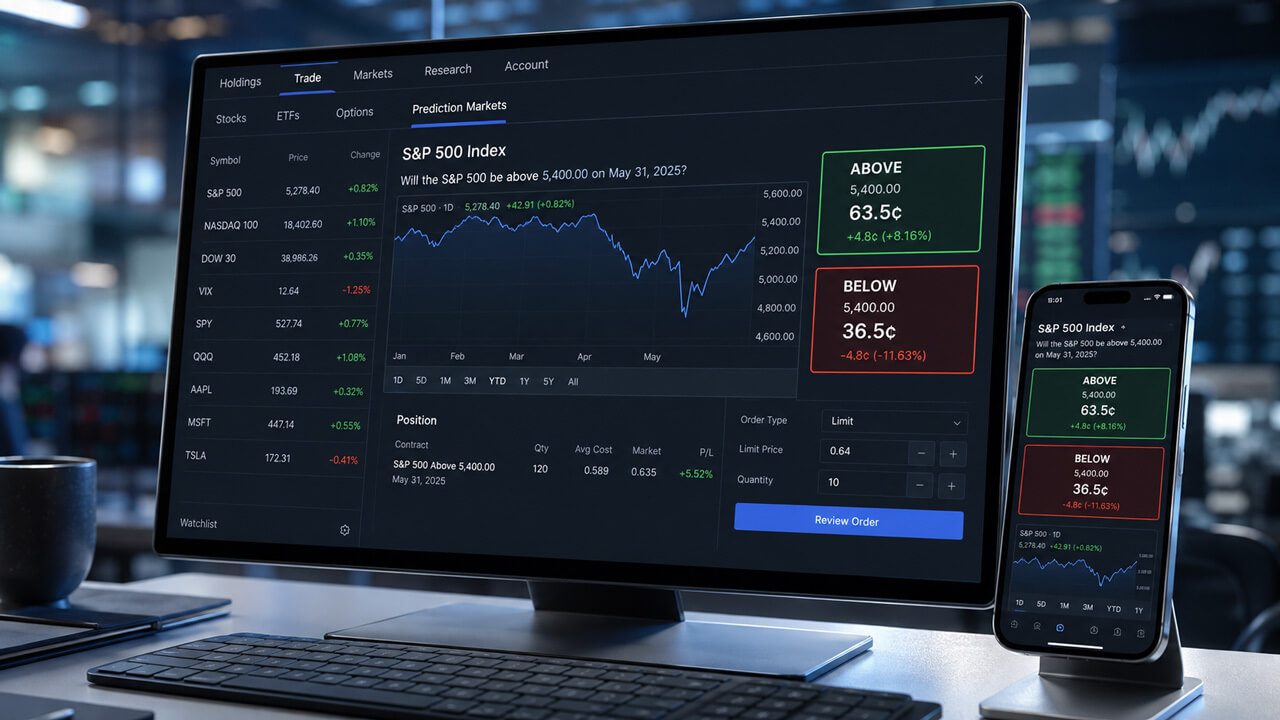
Charles Schwab Joins Forces with Cboe for New Prediction Market Products
Financial giant Charles Schwab is reportedly exploring a partnership with Cboe Global Markets to offer prediction-style trading products to its millions of users. According to reports from the Wall Street Journal, this move aims to capitalize on the growing popularity of event-based betting, which allows users to trade on the outcome of real-world events. By integrating these tools directly into their existing platforms, Schwab and Cboe are positioning themselves as major competitors to current market leaders like Polymarket and Kalshi.
Understanding Prediction Markets and Wall Street
A prediction market (a place where people trade based on the likelihood of future events) functions similarly to an exchange, but instead of stocks, users buy "yes" or "no" contracts. For example, a user might bet that the S&P 500 will close above a certain level by the end of the day. Traditionally, this space has been dominated by decentralized platforms like Polymarket, which uses blockchain (a digital ledger that records transactions across a network) to facilitate trades. However, Wall Street is now looking to offer these same opportunities within a regulated, traditional brokerage environment.
The partnership between Schwab and Cboe specifically focuses on S&P 500 prediction products. By using Mini-SPX options—which are contracts that give traders the right to buy or sell a smaller portion of the S&P 500 index—Cboe can package these trades as simple yes-or-no options. This makes complex financial strategies much easier for beginner investors to understand and execute without needing to navigate the complexities of decentralized finance or specialized betting apps.
The Competition Between Schwab, Kalshi, and Polymarket
Until recently, Polymarket sat at the top of the prediction market food chain, fueled by massive volume during the 2024 election cycle. Because Polymarket is decentralized, it often faces regulatory hurdles in the United States. Meanwhile, Kalshi has fought legal battles to offer similar legal event-betting in the U.S. Schwab’s entry into this market is a significant shift because it brings massive liquidity (the ease with which assets can be bought or sold without affecting their price) and a pre-existing trust from mainstream American investors.
For many retail traders, the ability to access prediction markets within their existing Charles Schwab account is more convenient than setting up a crypto wallet or moving funds to a niche platform. This convenience could lead to a migration of users from platforms like Kalshi back to traditional brokers. As Cboe refines its binary (two-choice, such as yes or no) trading materials, the line between traditional stock investing and event-based prediction is beginning to blur.
What This Means for USA Investors
For investors in the United States, this development means more choices and better consumer protection. When you trade on a regulated platform like Schwab, your funds are protected by standard financial regulations that decentralized platforms may lack. However, it also means that these prediction products will be strictly monitored by the government, potentially limiting the types of events you can bet on compared to the more wide-ranging categories found on crypto-based sites.
Investors should also prepare for lower barriers to entry. If you already have a Schwab account, you may soon see options to trade on economic data, such as inflation rates or Federal Reserve decisions, right alongside your retirement funds. This trend highlights a broader movement where traditional finance is adopting the most popular features of the crypto world to keep its users engaged.
Source: CryptoSlate