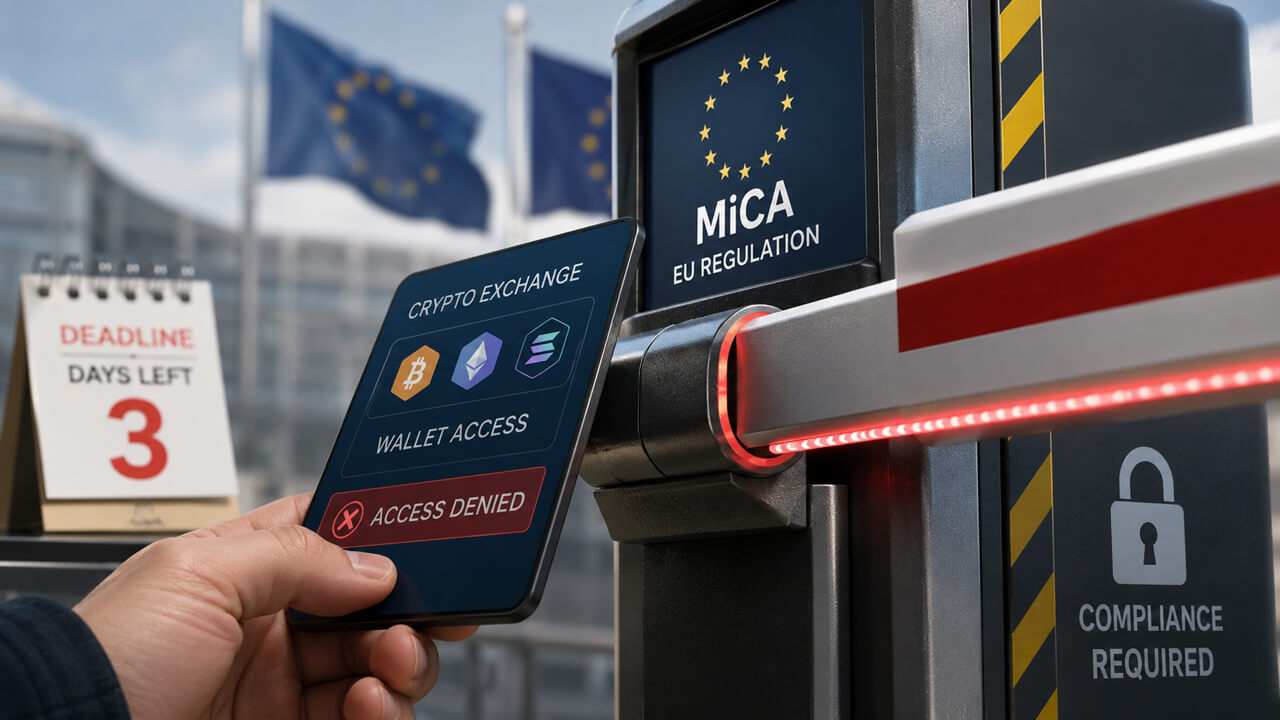
EU Crypto Rules: Millions of Users Face Potential Exchange Cutoff Under MiCA
Millions of cryptocurrency users across the European Union (EU) are facing a major deadline as the Markets in Crypto-Assets (MiCA) regulation prepares to take full effect. On July 1, 2026, the temporary permissions that allowed crypto companies to operate while awaiting official licenses will expire. This shift aims to standardize how digital assets are traded across Europe, but it poses an immediate risk to users whose preferred exchanges may fail to meet the strict new compliance standards in time.
Understanding the MiCA Impact on Global Trading
MiCA, or Markets in Crypto-Assets (the first comprehensive legal framework for digital assets in the EU), represents a massive shift in how the industry operates. Currently, many platforms operate under a 'grandfathering' period, allowing them to serve customers while their paperwork is processed. However, as this window closes, any exchange, broker, or wallet provider that hasn't secured a MiCA license will be legally barred from offering services to EU residents.
For the average retail investor, this could mean sudden account restrictions or the total loss of access to specific platforms. Crypto exchanges (online marketplaces where you buy and sell digital coins) are now racing to comply with rules regarding capital reserves, consumer protection, and cybersecurity. Experts warn that smaller platforms or those that struggle with transparency might be forced to exit the European market entirely, leaving users to find new homes for their digital assets.
Stability Versus Stability and Stablecoins
The regulation also places heavy scrutiny on stablecoins (cryptocurrencies designed to have a steady price linked to a currency like the US Dollar). Under MiCA, issuers of these coins must meet rigorous banking-style requirements. This has already led some major exchanges to delist or restrict certain stablecoins that do not meet EU standards. This ensures that users are protected from 'de-pegging' events where a coin loses its value, but it also limits the variety of assets available for trading.
While the focus is currently on European borders, the ripple effects are being felt globally. Large international exchanges must decide whether to adjust their entire global operation to meet these standards or segregate their European users into a separate, more regulated silo. This decision impacts liquidity (the ease with which an asset can be turned into cash) and the types of trading pairs available to all users on these platforms.
What This Means for USA Investors
For investors in the USA, the MiCA deadline serves as a preview of potential future domestic policy. While the United States does not yet have a single federal framework like MiCA, American regulators often look to European standards when drafting their own rules. If major exchanges like Coinbase or Kraken successfully navigate MiCA, it proves they can handle strict oversight, which may make them safer choices for US-based users as well.
Furthermore, US investors who use international platforms should check if their exchange is compliant with MiCA. A platform that fails to meet European standards might be at higher risk of regulatory action in other jurisdictions, including the US. As the global crypto market becomes more interconnected, a crackdown in Europe can cause price volatility or reduced trading volume that affects American portfolios. Staying informed about international law is no longer optional for serious crypto enthusiasts.
Source: CryptoSlate