Wall Street’s Idle Cash Enters Crypto Trading via Tokenized Funds
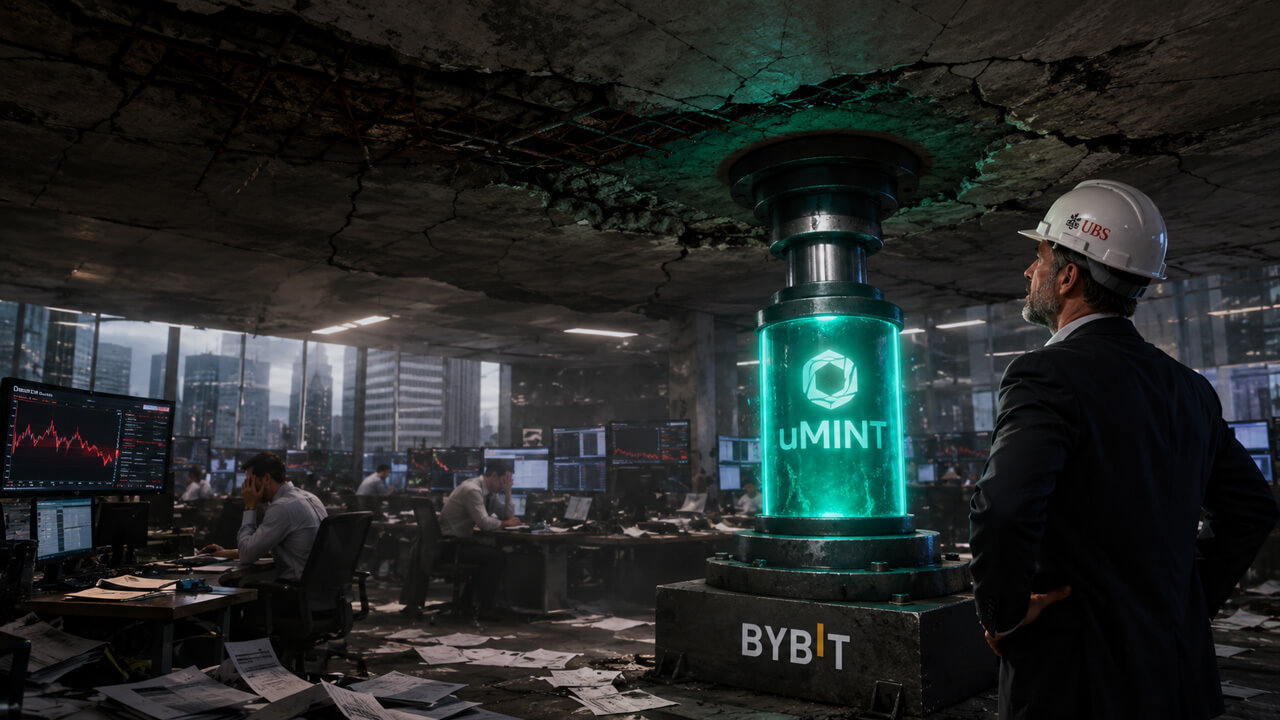
Major financial institutions from Wall Street are finding new ways to put their idle cash to work within the cryptocurrency market. Recently, the first successful deployment of tokenized money market funds as collateral (assets used to secure a loan or trade) occurred on a major digital exchange. This move, involving giants like UBS and the crypto exchange Bybit, marks a significant shift in how traditional finance interacts with digital assets. By turning stable, interest-bearing bank funds into digital tokens, big investors can now trade Bitcoin and other assets without ever moving their money back into traditional dollars.
The Rise of Tokenization in Global Markets
Tokenization (the process of turning real-world assets into digital tokens on a blockchain) is the engine behind this change. In this specific case, the project involves U-MINT, a framework that allows institutional money market funds to be used as margin. Margin is essentially the collateral required to open a trading position. Traditionally, traders had to use stablecoins like USDT or cash. Now, they can use tokenized versions of low-risk government bonds and cash equivalents managed by world-class banks.
This development is crucial because it solves a major problem for big banks: efficiency. In the past, money sitting in a bank account earned interest but couldn't be used instantly for crypto trading. By using tokenized money market funds, institutional traders can continue earning a yield (a percentage of profit earned over time) on their cash while simultaneously using that same value to back their crypto trades on exchanges like Bybit. This creates a dual-benefit system that makes the crypto market much more attractive to traditional hedge funds.
Challenges in Custody and Liquidation
While the technology is exciting, there is still a lot of "fine print" that remains hidden or complex. One major concern is custody (the safe storage and protection of digital assets). When a bank's money becomes a token on a crypto exchange, who is truly responsible if that exchange is hacked or faces financial trouble? Furthermore, the terms of valuation—how the market decides exactly what that token is worth at any given second—must be incredibly precise to prevent market crashes.
Another hurdle is liquidation (the process of selling off assets quickly to cover losses). If a trader's position goes bad, the exchange must be able to sell the tokenized money market fund instantly. However, traditional bank funds aren't always easy to sell in the middle of the night or on weekends. Establishing clear rules for how these tokens are sold during high-stress market events is the next big step for regulators and developers alike.
What This Means for USA Investors
For everyday investors in the USA, this trend signals that the "big players" are finally arriving in the crypto space with professional tools. While retail traders might not use U-MINT directly yet, the entry of institutional cash usually leads to higher liquidity (the ease with which an asset can be bought or sold without affecting its price). This often results in more stable prices and less dramatic swings for major assets like Bitcoin and Ethereum.
However, USA investors should remain cautious. As traditional finance and crypto continue to merge, the risks of one market can spill into the other. If a major bank-backed token has issues, it could impact the price of crypto assets across the board. Monitoring how US regulators like the SEC handle these "hybrid" assets will be vital for anyone holding a digital portfolio in the coming years.
Source: CryptoSlate