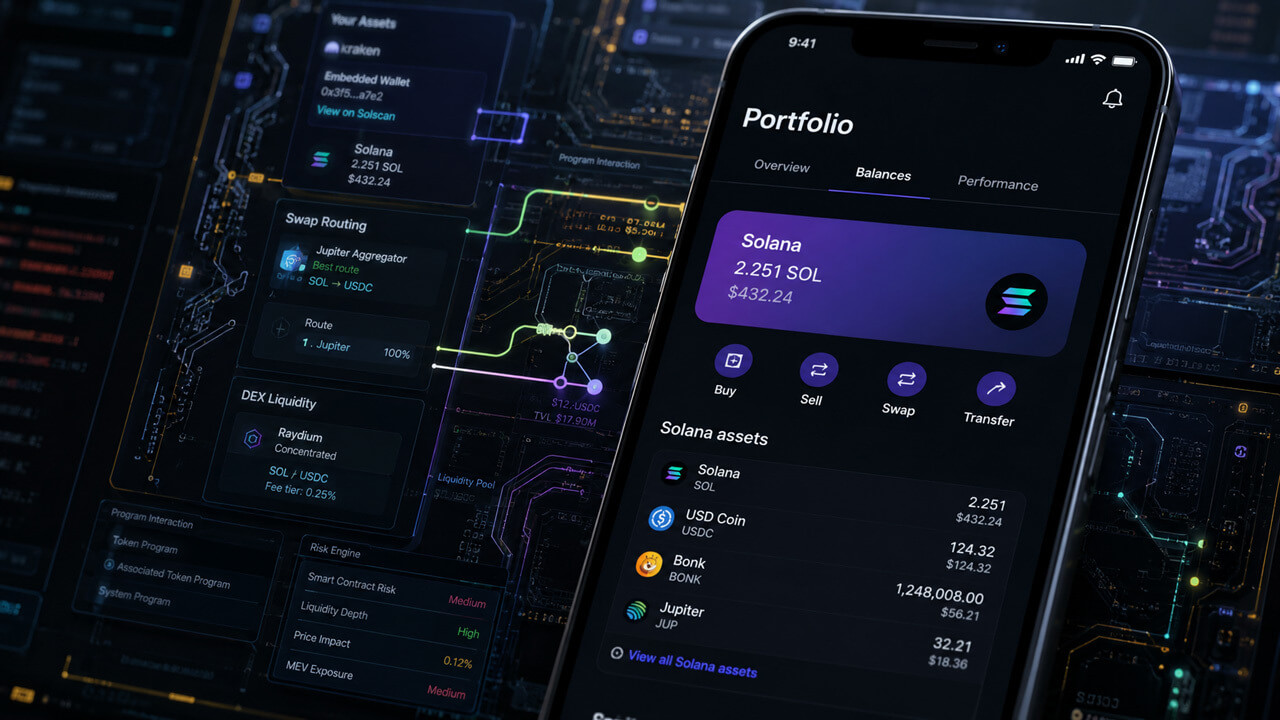
Kraken Adds 2,500 Unapproved Solana Tokens to Mobile App
Major cryptocurrency exchange Kraken has announced a massive expansion of its mobile app functionality by adding access to over 2,500 new tokens on the Solana network. This move, launched this week, allows users to trade assets that haven't undergone Kraken's traditional vetting process. By integrating a decentralized exchange (an automated marketplace that lets users trade directly without a middleman, or DEX) interface into their standard app, Kraken is bridging the gap between simple trading and the complex world of on-chain finance. However, the exchange has been clear that the risk for these specific tokens remains entirely on the blockchain and outside of their usual safety guarantees.
How Kraken is Changing the Trading Experience
For most beginners, buying crypto involves using a centralized exchange where the company manages the security. Kraken’s new feature changes this by giving users a window into the Solana ecosystem. Solana is a high-speed blockchain (a digital ledger that records transactions) known for low fees and a high volume of new projects. By adding 2,500 tokens, Kraken is catering to the demand for "memecoins" and early-stage projects that are typically only available on technical platforms like Raydium or Jupiter. This integration makes it much easier for everyday people to find newer, smaller coins without needing a separate crypto wallet or private keys.
The Risks of Unvetted Crypto Assets
While the convenience is high, the risks are equally significant. Usually, when an exchange like Kraken lists a coin, they check for security flaws and the legitimacy of the team behind it. For these 2,500 new Solana tokens, Kraken is skipping that review. These assets are "unapproved," meaning they could be highly volatile or even part of a scam. Kraken is essentially acting as a browser; they provide the interface, but they do not control the tokens themselves. If a project fails or a developer disappears with the funds, Kraken cannot recover the money because the transaction happened "on-chain" (recorded directly on the public blockchain ledger rather than Kraken's internal books).
The Growing Popularity of the Solana Network
Solana has become the go-to network for new token launches in 2024 because it is much cheaper than its main competitor, Ethereum. On Ethereum, a single trade might cost $20 in fees, whereas on Solana, it costs less than a penny. This has led to an explosion of thousands of new tokens every day. By bringing these assets into their app, Kraken is trying to compete with other platforms like Coinbase and Binance, who are also looking for ways to give their users access to the "Wild West" of decentralized finance without making it too difficult to navigate.
What This Means for USA Investors
For investors in the United States, this development is a double-edged sword. It provides a safer-feeling environment to explore experimental tokens that were previously hard to buy. However, American users must be cautious about the tax implications. Every trade between two different cryptocurrencies is considered a taxable event by the IRS. Additionally, because these tokens are unvetted, US investors may have no legal recourse if they fall victim to a "rug pull" (a scam where developers abandon a project and take investors' money). Always remember that while the app looks familiar, the assets inside this specific Solana section are not backed by Kraken’s usual security protocols.
Source: CryptoSlate