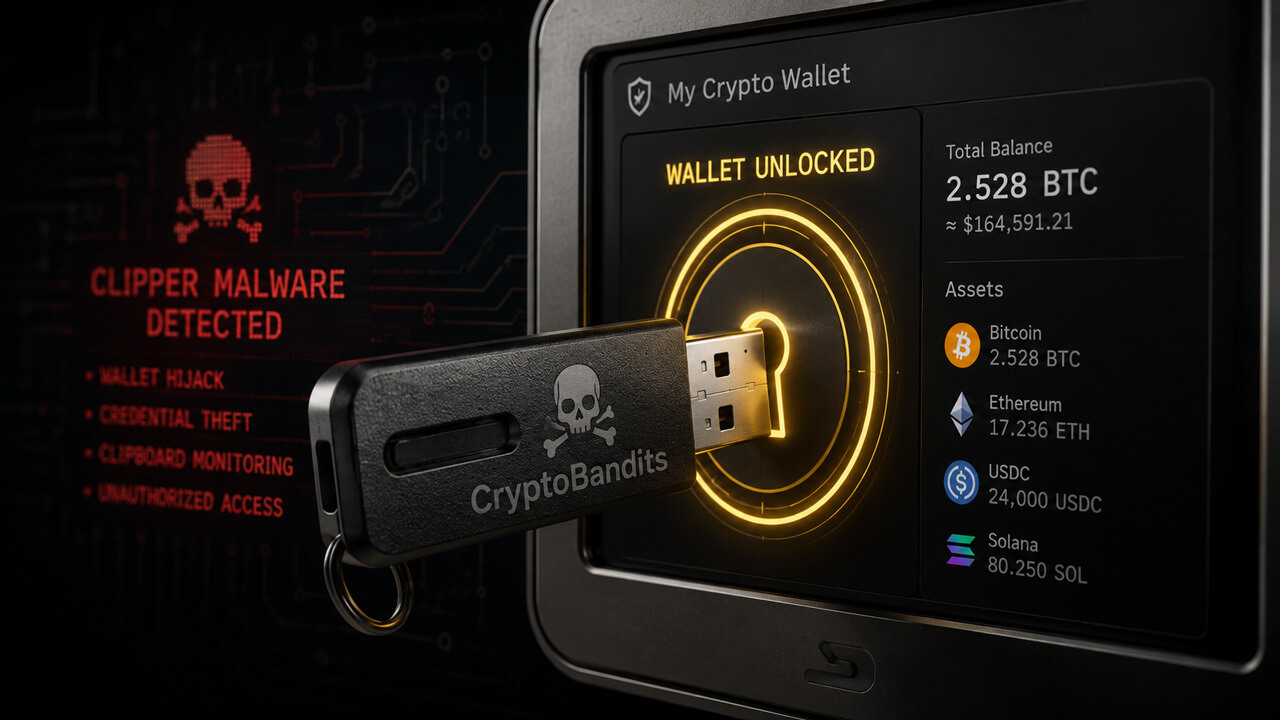
Microsoft Issues Critical Warning Over CryptoBandits USB Malware
Microsoft researchers have recently identified a dangerous new threat known as CryptoBandits malware, which targets cryptocurrency owners by infiltrating their Windows-based computers. This malicious software specifically focuses on compromising USB drives (portable flash storage) and digital wallets used for self-custody (the practice of holding your own private keys instead of using a third-party exchange). The alert, issued this week, highlights how attackers can intercept transactions, steal sensitive phrases, and ultimately drain assets from unsuspecting users who believe their offline storage is safe.
How CryptoBandits Steals Your Digital Assets
The CryptoBandits malware operates by turning a standard Windows machine into a tool for theft. Once a computer is infected, the software monitors the user’s activity, specifically looking for interactions with cryptocurrency wallets. One of its most effective tactics is modifying the clipboard—the temporary storage used when you copy and paste text. When a user copies a wallet address (a long string of characters used to send or receive crypto), the malware silently replaces it with the attacker's address. If the user doesn't double-check the characters before clicking 'send,' the funds are permanently lost to the criminal.
Beyond address swapping, the malware is designed to capture seed phrases (a series of 12 to 24 words that act as a master password for your wallet). If a user types these words into a file or a compromised window, the malware records the keystrokes. It can also take unauthorized screenshots of your desktop to gain context about which wallet brands or assets you are using. This information is then sent back to a remote server controlled by the hackers, giving them full access to your funds even if you use hardware wallets (physical devices designed to store crypto keys offline).
The Vulnerability of USB Drives
While many enthusiasts believe that keeping data on a USB drive provides an impenetrable 'air gap' (a security measure where a device is disconnected from the internet), Microsoft warns that this is a false sense of security if the host computer is compromised. The CryptoBandits malware can detect when a USB drive is plugged in and scan its contents for wallet-related files, such as private keys or password backups. Because many beginners use USB drives to store their recovery information, they inadvertently provide a direct path for the malware to steal their entire portfolio.
What This Means for USA Investors
For investors in the United States, this warning serves as a vital reminder that self-custody requires constant vigilance. As the American crypto market grows, so does the sophistication of cybercriminals targeting retail investors. Simply owning a hardware device or using a USB drive for storage is no longer enough to guarantee safety. USA investors should ensure their Windows operating systems are always updated with the latest security patches and consider using dedicated, clean computers for crypto transactions. Additionally, it is highly recommended to use 'multisig' (multi-signature) setups, which require more than one device to authorize a transaction, making it much harder for a single piece of malware to succeed.
Source: CryptoSlate