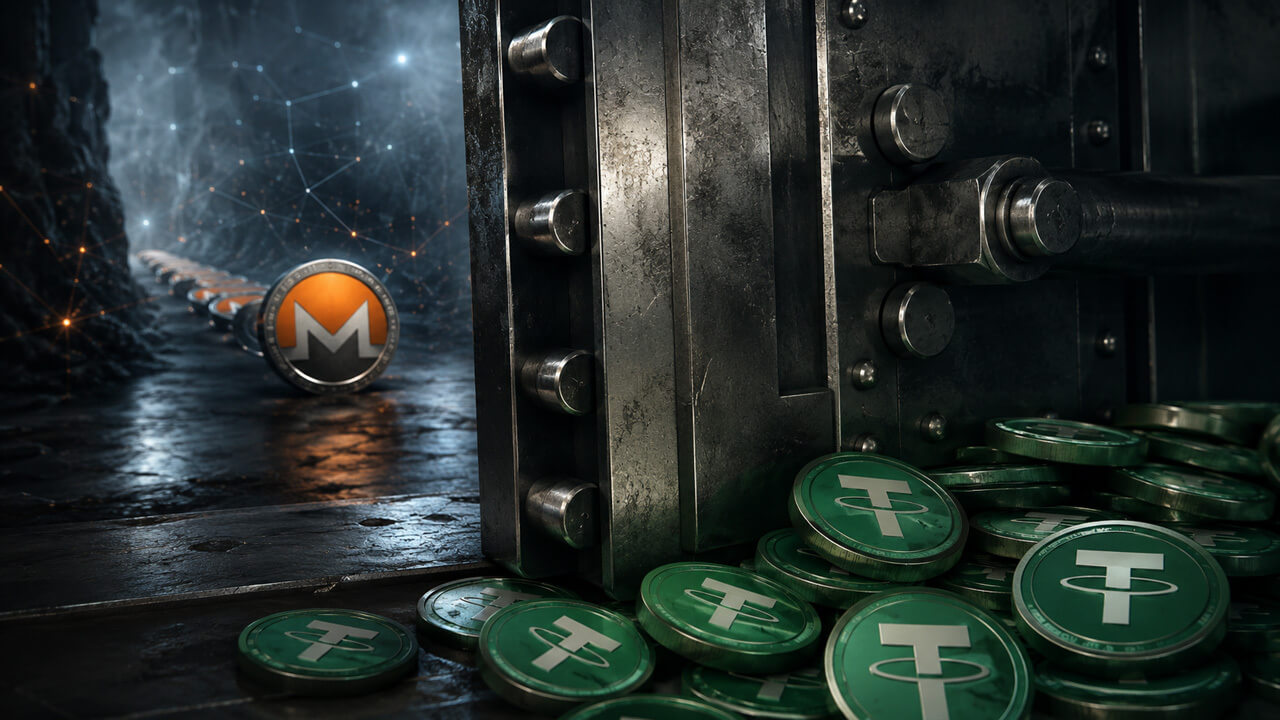
Tether Freezes $72M USDT in Major Monero Money Laundering Sting
Tether, the company behind the world's most popular stablecoin (a cryptocurrency designed to stay at a steady value of $1.00 USD), recently froze approximately $72 million in USDT. This action occurred after investigators discovered a massive $120.2 million routing through Monero (a privacy coin that hides transaction details). Unlike many previous freezes, this specific action was not triggered by a digital heist or hack, but by a proactive law enforcement investigation into alleged money laundering. The freeze signifies a growing trend where centralized crypto companies work closely with authorities to track and stop illicit financial flows before they disappear into private networks.
How Traceable Liquidity Battles Privacy Coins
In the world of digital finance, liquidity (the ease with which an asset can be converted into cash or other tokens) is vital. USDT is highly liquid and operates on public blockchains (digital ledgers that record all transactions). Because Tether is a centralized company, it has the power to blacklist or 'freeze' digital wallets, making the funds inside them unusable. When criminals try to move large amounts of USDT through Monero, they are attempting to use 'privacy rails' to hide their tracks. However, this recent sting shows that the transition point between public and private networks is where most users are caught.
Law enforcement officials often wait for 'traceable liquidity'—money that they can see moving on public blockchains—to reach a certain point before acting. By freezing the USDT before it could be fully converted into Monero, Tether and the authorities prevented millions of dollars from becoming untraceable. This strategy highlights a massive cat-and-mouse game between those seeking total anonymity and the companies that must follow global financial regulations.
What This Means for USA Investors
For American crypto investors, this event serves as a critical reminder that stablecoins like USDT are not entirely 'permissionless.' While you own the tokens in your wallet, the central issuer still maintains control over the software that moves them. If you are using reputable exchanges and following standard tax laws, your funds are safe. However, this news emphasizes that the United States government is becoming much better at monitoring the 'on-ramps' and 'off-ramps' (the places where you trade crypto for dollars or other coins).
Investors should also understand that 'privacy coins' like Monero are under heavy scrutiny by the SEC (Securities and Exchange Commission) and other regulators. As more USDT is frozen in connection to these networks, we may see more exchanges remove privacy coins to avoid legal trouble. Always ensure your assets are held in a way that aligns with current transparency standards to avoid unintended freezes.
Source: CryptoSlate