US Stablecoin Regulation: Turning Crypto Issuers into Pseudo-Banks
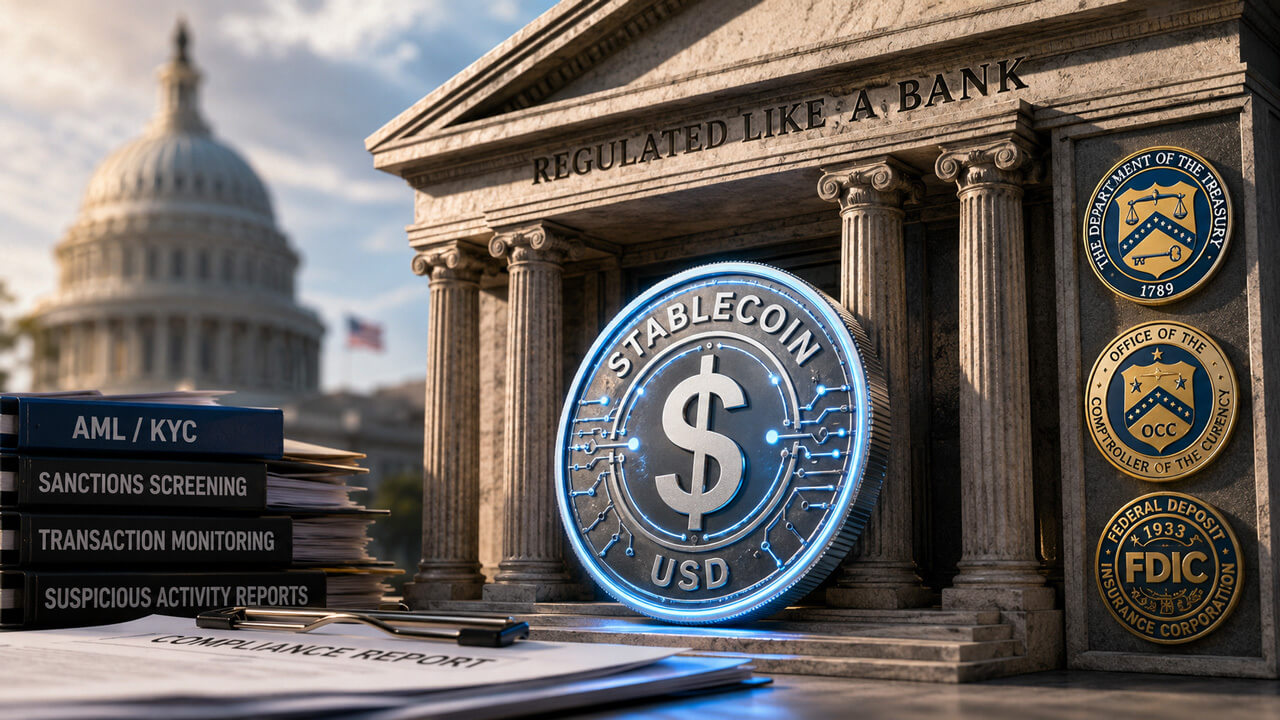
Three major US federal agencies—the Treasury, the Office of the Comptroller of the Currency (OCC), and the Federal Deposit Insurance Corporation (FDIC)—have proposed sweeping new rules that would force stablecoin issuers to operate more like traditional banks. Stablecoins (digital currencies pegged to a stable asset like the US dollar) are now under the spotlight as regulators seek to control financial risks. This move, announced recently in Washington D.C., aims to protect the broader financial system by ensuring that the companies behind these digital tokens follow strict reporting and security protocols.
The proposed framework requires stablecoin issuers to implement robust anti-money laundering (AML) and sanctions programs. This means companies must verify the identities of their users to prevent illegal activities. Additionally, the OCC is requesting weekly confidential reports and quarterly financial disclosures to ensure these companies actually hold the reserves they claim to have. For the average investor, this adds a layer of transparency that has been missing from the private stablecoin market for years.
How New Financial Reporting Works for Crypto
Under the new guidelines, stablecoin companies would essentially become "pseudo-banks." The FDIC wants these entities to follow the Bank Secrecy Act, a law that requires financial institutions to assist government agencies in detecting and preventing money laundering. By treating these companies like banks, the government is signaling that stablecoins are no longer a niche hobby but a core part of the American financial landscape. However, critics argue that these heavy requirements might create a "barrier to entry" (a situation where high costs or rules prevent new, smaller companies from starting a business), potentially leaving the market dominated by only the largest players like Circle or Tether.
Smaller startups may struggle to afford the legal and compliance teams necessary to meet weekly reporting deadlines. This could lead to a less competitive market where only a few massive corporations survive. While this might make the surviving coins "safer," it could also slow down innovation in the decentralized finance (DeFi) space, where stablecoins are used as the primary medium of exchange for lending and trading.
What This Means for USA Investors
For USA investors, this regulation is a double-edged sword. On one hand, it significantly reduces the risk of a "bank run" (a situation where everyone tries to withdraw their money at once, and the company doesn't have enough cash). Increased oversight from the FDIC and OCC means you can have more confidence that your 1.00 USD stablecoin is actually worth 1.00 USD. It brings a level of institutional trust that could encourage more mainstream adoption of crypto for daily payments and long-term savings.
On the other hand, privacy advocates are concerned. With issuers required to run strict AML programs, the days of anonymous stablecoin transactions are likely coming to an end. Every transaction could be linked back to a verified identity, similar to a wire transfer at a traditional bank. Furthermore, if smaller, more innovative stablecoins are pushed out of the market due to high compliance costs, investors may have fewer options to choose from, leading to higher fees or lower interest rates on their holdings.
Source: CryptoSlate