Wall Street Pre-Pays for Bitcoin Miners Moving Into AI Infrastructure
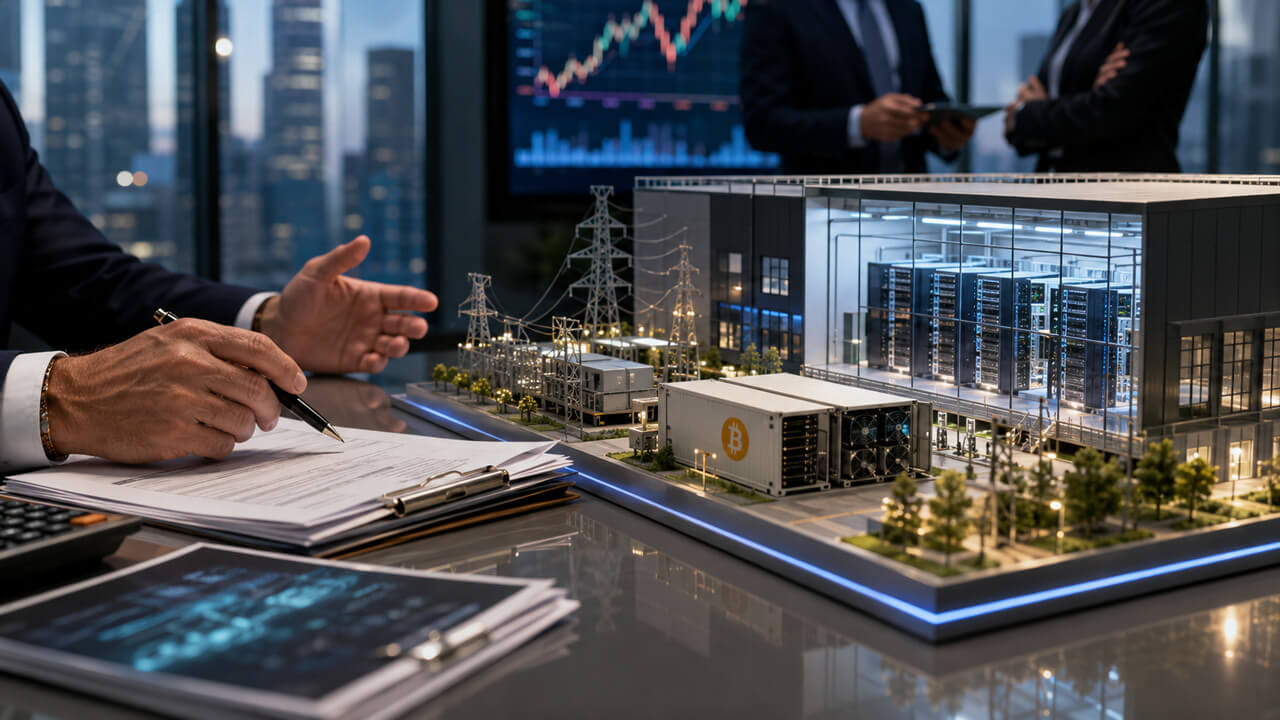
Major investment firms on Wall Street are currently shifting their focus toward Bitcoin miners—the specialized companies that use powerful computers to secure the Bitcoin network—who are expanding into the world of Artificial Intelligence (AI). This trend, highlighted in a recent valuation framework by global investment manager VanEck, shows that the market is willing to pay a premium for energy capacity (megawatts) intended for AI use even before the physical infrastructure is fully constructed. This shift is happening because AI processing requires similar massive amounts of electricity and cooling as crypto mining, making these firms perfect partners for the tech boom.
The Valuation Gap Between Bitcoin and AI
In the world of professional finance, valuation (the process of determining how much a company is worth) is everything. Traditionally, Bitcoin miners were valued simply on how many Bitcoins they could produce. However, the energy grid is becoming a scarce resource. A megawatt (a unit of power equal to one million watts) that is leased to an AI company is now being priced higher than a megawatt used for mining Bitcoin. This is because AI contracts often provide more stable, long-term revenue compared to the volatile price of digital currencies.
VanEck’s latest research suggests that the stock prices of publicly traded mining companies are beginning to reflect these future AI capabilities. When a miner announces a partnership with a tech firm to host AI chips, their stock often surges. Investors are essentially placing bets on the 'pipeline'—the planned development of power sites—rather than just the machines currently plugged into the wall. This demonstrates a massive vote of confidence in the dual-purpose nature of modern data centers.
How Miners Are Transitioning to High-Performance Computing
Bitcoin mining usually involves ASICs (Application-Specific Integrated Circuits), which are machines designed to do only one thing: mine crypto. In contrast, AI requires GPUs (Graphics Processing Units), which are flexible chips used for complex calculations. While the hardware is different, the infrastructure required—such as high-voltage power connections, large cooling fans, and physical security—is almost identical. Miners who can quickly pivot their facilities to High-Performance Computing (HPC) are winning the race for capital.
This transition isn't without risk. Building out data centers for AI is significantly more expensive than setting up a basic Bitcoin mining farm. AI facilities require better air filtration and more reliable internet connections. However, Wall Street seems convinced that the 'AI tenant'—a tech company renting space—is a more reliable source of cash flow than the unpredictable rewards of the Bitcoin block subsidy (the new coins miners receive for their work).
What This Means for USA Investors
For investors in the United States, this trend signals a maturing of the crypto industry. It means that Bitcoin mining stocks are no longer just a proxy for the price of Bitcoin. Instead, they are becoming 'energy infrastructure' plays. If you own shares in mining companies, you are now indirectly investing in the infrastructure that powers the global AI revolution. This diversification could lead to lower volatility (price swings) for these stocks over time, as they secure long-term contracts with Silicon Valley giants.
However, beginners should be cautious. Not every miner can successfully make the switch. Evaluating a company’s access to cheap, renewable energy and its proximity to fiber-optic internet lines is now just as important as knowing their hash rate (the total computational power used to mine). USA investors should look for companies with clear 'power purchase agreements' and signed letters of intent with AI firms to verify that the hype matches the reality.
Source: CryptoSlate